

Local tribe begins final stage to complete new building
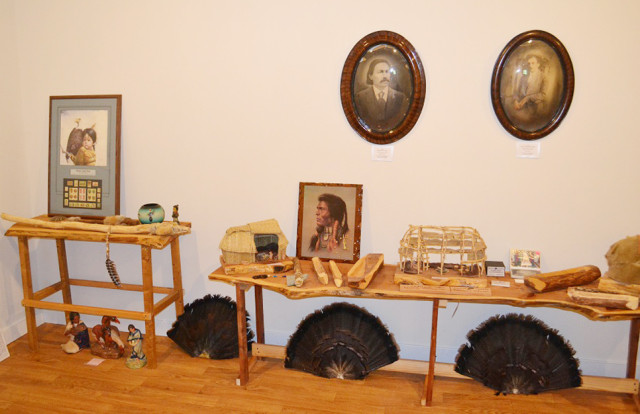
A museum is among one of the attractions at the Chickahominy Indians Eastern Division new tribal center. Displays in the museum include miniatures, tribal regalia, historical documents, and pictures depicting the organization’s past, present, and future goals.Andre' Jones photo
Usually, a storybook ending tends to bring happiness and delight with a group of people living happily ever after. For the Chickahominy Indian Eastern Division (CIED) tribe, the journey along the way brought smiles to an organization that continues to grow through hard work and unity.
With only 164 members, the smallest tribe in the state of Virginia is now on the verge of completing a cultural tribal center. While the center goes through the final stages, the tribe continues to look for any type of donation to help reach the epic grand opening.
“Land was bought in 2002 and cleared,” said Joanne Howard. “Construction for the building began in 2008 and everybody has been helping to make it work.”
That building lies on a portion of 42 acres of land. With members Craig Stewart’s and Norman Hogge’s hands-on approach, construction seemed to run efficiently.
But with all good stories, a setback attempted to derail construction. A declining economy resulted in donations coming in at a minimal rate. Still, the group recognized since 1981 by the state pulled together and made the second push.
More members began to dedicate time and personal trades and skills to complete construction. Among them included Matt Adkins, who doubled in duties with partial grant writing as well as installing technology upgrades, including wireless internet access.
“This is a big deal to us,” said Adkins. “Now we can see the light at the end of the tunnel with the work.”
And donations have come in many forms. Stewart’s and Hogge’s background in construction helped complete the carpentry and work along the wall. Other members contributed by installing HVAC units, plumbing, and painting. In total, more than $65,000 has been contributed to the project through donations and labor.
“We worked as we got funds,” said Hogge. “It has been an ongoing process, but this building will be something we can hand down to future generations.”
While the facility still is undergoing the final stages of construction, members are able to view it through an open house, usually by request. Among the building’s features include a museum consisting of the history of the CIED, an exercise room, offices for officials, a meeting room, and a foyer capable to hold gatherings.
“We are hoping when this building is complete to host festivals, training, events, and even rent it out for receptions,” said Howard. “New Kent supervisors could use this area as a retreat area.”
With a goal of having the center open by Jan. 1 of next year at the latest, tribe members are hoping to receive more donations in any form to close the chapter on another step in the tribe’s growth. The tribe has planned a yard sale in August.
“We need anything we can get,” said Howard. “This building is the future and we want to make sure we have everything complete to share with the community.”
To make a donation or for more information about the non-profit organization, visit the group’s website at www.cied.org.